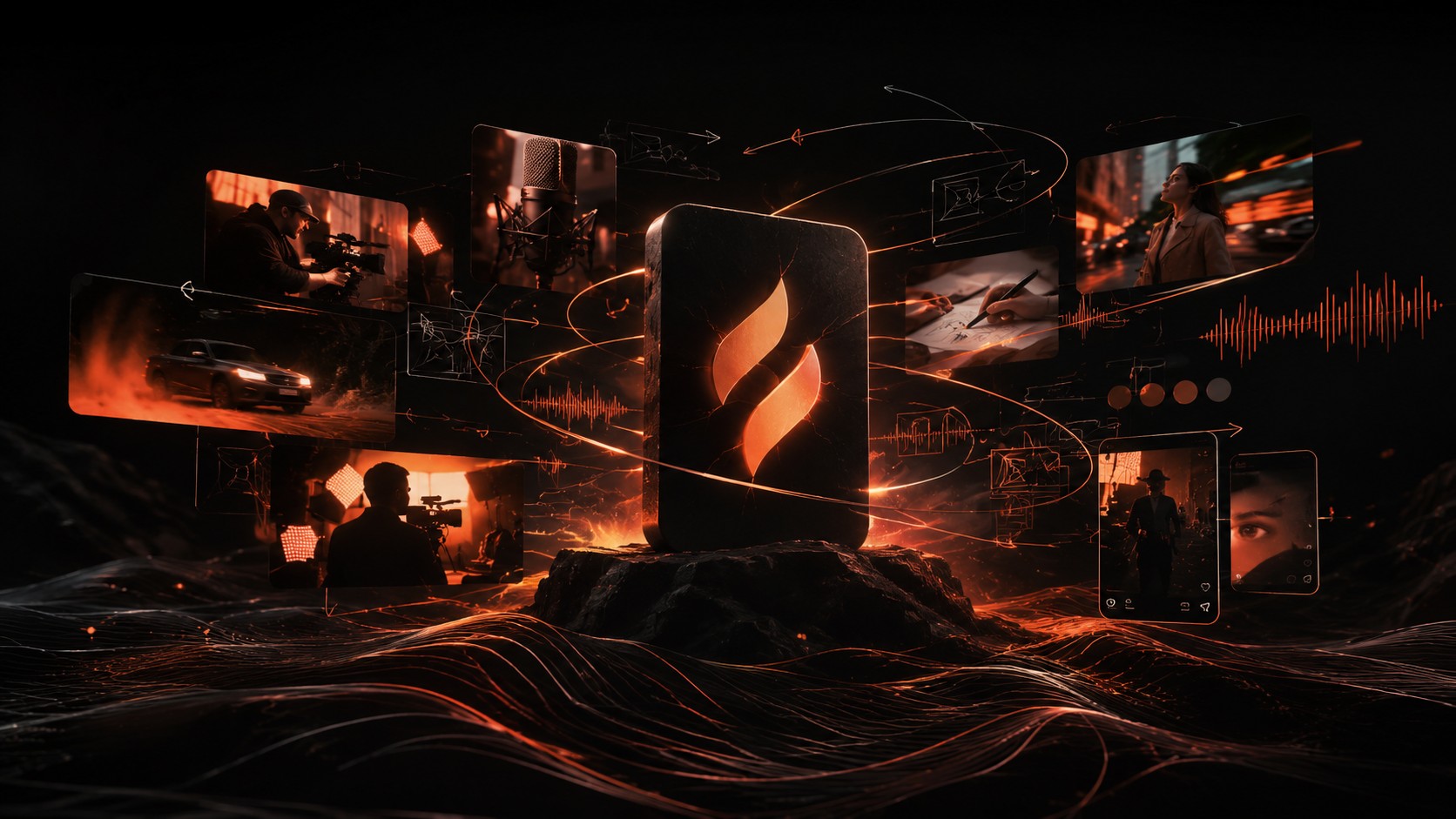
A campaign ends. A brand engine keeps running. For Hong Kong brands competing in a crowded, fast-scrolling market, the difference isn't budget — it's architecture. And the architecture that works in 2026 pairs AI production with traditional creative craft.
01 A campaign is an event. A brand engine is a system.
The classic campaign model looks like this: brief, big production, launch, fade. Six weeks of effort, one spike of attention, then silence until the next budget cycle. It's expensive and it doesn't compound.
A brand engine is different. The same brief produces a hero film, a podcast series, a library of social cuts, localized variants, and ad creative — and the system keeps generating from the original assets. Attention doesn't spike and die; it sustains.
This is the shift AI makes possible. Traditional media gives you the hero moment. AI gives you the multiplication that turns one moment into a steady presence.
02 The AI + traditional media blend
Transforming a brand with AI isn't about replacing production. It's about sequencing it:
- Traditional media sets the standard. A real shoot, a directed film, a recorded podcast — the assets with soul and credibility.
- AI extends the reach. From those hero assets, AI generates platform cuts, language versions, thumbnails, and test variants.
- Traditional craft curates. A human reviews the AI output, kills the weak variants, and ships the on-brand ones.
- AI maintains the cadence. Scheduled, localized, and optimized so the brand shows up daily without a new shoot each time.
The formula
One human-made hero asset + AI multiplication + human curation = a brand that feels premium and appears everywhere.
03 How Basis Media runs it: the 30-day pathway
Our 30-day launch pathway is the operating system for the brand engine:
- Week 1 — Discover & Strategise. We learn the brand, audience, and goals, then build a creative strategy engineered to perform.
- Week 2 — Concept & Creative Direction. Visual language, scripts, and storyboards are signed off before a frame is shot.
- Week 3 — Produce & Build. The hero shoot happens, and AI immediately begins versioning, localizing, and resizing the output.
- Week 4 — Launch & Amplify. Content goes live across paid and organic channels, then keeps producing variants for weeks after.
By the end, the brand hasn't just launched a campaign. It has a running content engine — fed by one production week, sustained by AI-assisted workflows, and guarded by senior creative review.
"We don't deliver a campaign. We hand over a system that keeps your brand visible long after launch day."
— Basis Media
04 Why this matters especially in Hong Kong
Hong Kong is a trilingual, mobile-first, exceptionally fast market. Three implications for brands:
- Language reach. English, Cantonese, and Mandarin audiences expect native-quality content. AI localization makes that practical; human review keeps it correct.
- Platform density. Instagram, Facebook, Threads, LinkedIn, RedNote, and more — each wants its own format. AI versioning is the only way to stay present everywhere without a studio per platform.
- Speed. Trends move in days. A brand engine built on AI-assisted production can respond while a traditional-only team is still booking a shoot.
For a brand in Tsuen Wan serving Hong Kong, the Greater Bay Area, and across Asia, this blend isn't a nice-to-have. It's the cost of staying visible.
05 Getting started with a brand engine
You don't need to rebuild everything at once. Start where repetition hurts most:
- Pick one hero asset — a film, a podcast, a launch story.
- Let AI generate the cuts, languages, and formats you'd otherwise pay to reshoot.
- Keep a senior creative in the loop for selection and brand safety.
- Measure what performs, then feed the winners back into the next production.
That's the loop. Over a few cycles it stops feeling like "making content" and starts feeling like "running a brand engine." That's the transformation AI + traditional media delivers — and it's exactly what we build at Basis Media.